fungi life cycle explained
In both sexual and asexual reproduction fungi develop spores that either fly on the wind or take a ride on an animal dispersing from the parent organism. Fungi exhibit the phenomenon of alternation of generation.

Blastocladiomycota An Overview Sciencedirect Topics
Spore Haploid The spore phase is the initial stage of the fungal life cycle.

. A yeast-like fungus commonly occurring on human skin in the upper respiratory alimentary and female genital tracts. The generalized life cycle of fungi. The life cycle of fungi has many different patterns based on the species of the fungi.
Spores produced both. Meiosis reduction division restores the haploid number of chromosomes and initiates the. Great yeast bud scars and pseudohyphae.
This is how the fungus reproduces asexually. In the life cycle of a sexually reproducing fungus a haploid phase alternates with a diploid phase. The single nucleus of the resting spore divides early in germination.
Two different mating types represented as type and type are involved. Most of the molds indoors are considered to go through a four-stage life cycle. One of these migrates into the germ tube.
Mushroom spores can detect. The haploid phase ends with nuclear fusion and the diploid phase begins with the formation of the zygote the diploid cell resulting from fusion of two haploid sex cells. For most of the molds indoors fungi are considered to go through a four-stage life cycle.
Terms in this set 21 Fungi unique for. By producing vast numbers of spores both sexually and asexually so in TWO parts of life cycle Major difference from plants. There are four basic steps in the life cycle of a fungi.
Life cycle of The life cycle of fungi can follow many different patterns. Fungal life cycles are unique and complex. The fused hyphae containing haploid nuclei from two.
This is the first stage in the life cycle of a fungus. Mycelium Diploid At the point when the mycelium develops and creates it may encounter other fungi. Fungi replicate sexually andor asexually.
Brundrett 1990 showed the same cycle pattern using an alternative diagram of the developmental stages of a mould. Most fungi are microscopic but many produce the visible fruitbodies we call mushrooms. In most fungi the asexual reproductive cycle comes first with a sexual reproductive cycle to follow.
Mushroom spores are tiny microscopic reproductive units that are produced by fungi as well as some. Despite the name this doesnt have anything to do with bacteria or disease. To form n gametes n.
But this model provides a good overview in terms of how fungi grows from birth to death. Fungi can reproduce asexually by budding and many also have sexual reproduction and form fruitbodies that produce spores. Fungi reproduce sexually either through cross- or self-fertilization.
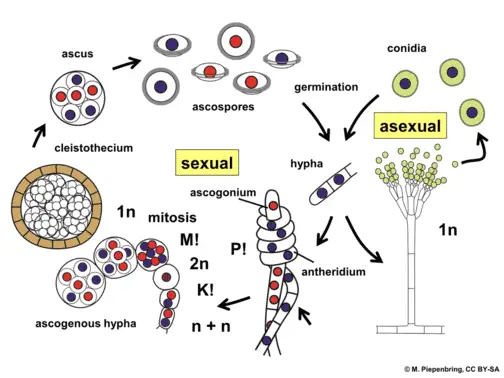
Fungi may reproduce either sexually or asexually. Life Cycle of Fungi. Spore germ hypha mature mycelium.
With the elongation of the germ tube most of the mitochondria migrate into it and become concentrated near the tip. The two nuclei fuse into a diploid nuclei and meiosis further divides the nuclei into four. Under favourable conditions each conidium germinates by germ tube which ultimately grows into somatic mycelium of the new individual.
While some fungi reproduce sexually others reproduce asexually. Life cycle of fungi. The Life Cycle of Fungi 1.
Some fungi are multicellular while others such as yeasts are unicellular. The electron-dense wall layer W 2 remains at the base of the germ tube and around the spore. This form of the fungus life cycle is only advantageous in locations where the clones will thrive.
This fungus has a dimorphic life cycle with yeast and hyphal stages. These two smaller cycles make up the life cycle of fungi. The life cycle of a mushroom begins and ends through five stages of evolutionary phases beginning as a fungal spore seeds and completing its cycle as a mature fruiting body the part of a mushroom we all identify and know that releases new spores to create a new cycle all over again.
Spore germ hypha mature mycelium. Not all fungi reproduce in the same way. The yeast produces hyphae strands and pseudohyphae.
Fungi are eukaryotic organisms and include yeasts moulds and mushrooms. With asexual reproduction a lone individual produces exact clones of itself. All fungi start as haploid spores.
The pseudohyphae can give rise to yeast cells by apical or. Haploid fungi form hyphae that have gametes at the tips. The fungi which reproduce sexually have alternating haploid and diploid phases.
Here the haploid spores produced from zygote germinate to produce haploid mycelia. The Life Cycle Of A Mushroom Spores Hyphae Mycelium Hyphal knot Mushroom. During sexual reproduction the changes involved in the process occur in regular sequence in cyclic order.
Fungi reproduce sexually either through cross- or self-fertilization. Haploid hyphae produce gametes which fuse by plasmogamy and karyogamy to produce diploid zygote. This cycle all takes place.
Perfect fungi are sexually and asexually replicated whereas imperfect fungi are only asexually reproduced by mitosis.

Biology Pictures Fungi Life Cycle 3 Life Cycles Fungi Biology

The World S Largest Mining Operation Is Run By Fungi Fungi Natural Farming Tree Study

Life Cycle And Lifespan Of Giant Millipedes Explained Keeping Bugs Life Cycles Millipede Life Cycle Stages
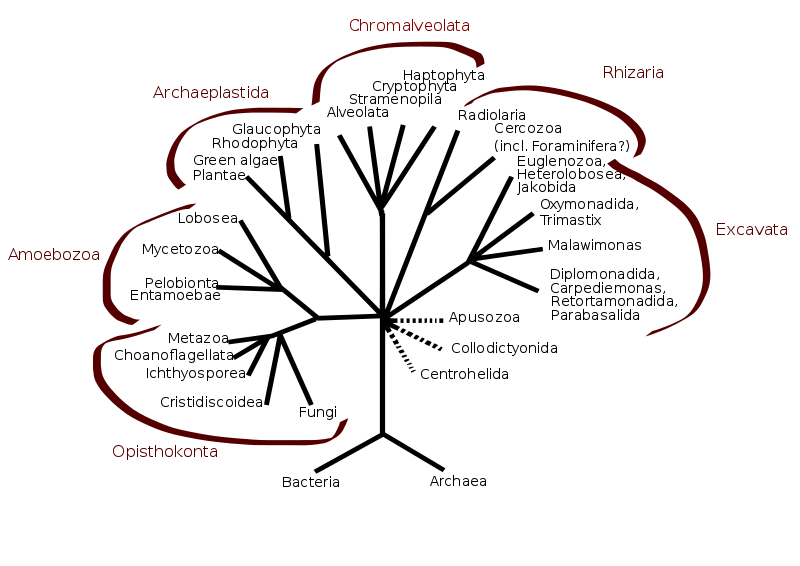
Intro To The Fungi Life Cycle Plantsnap

24 1c Fungi Reproduction Biology Libretexts
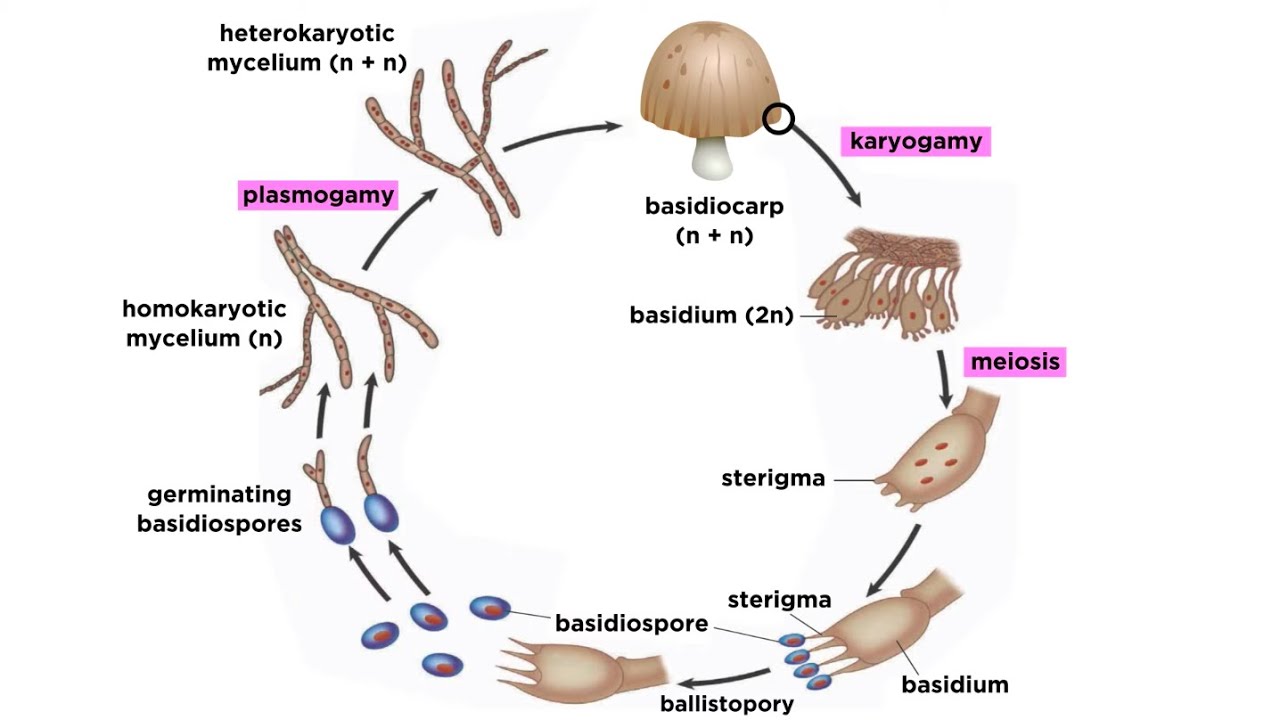
Basidiomycota Part 2 The Mushroom Life Cycle Youtube
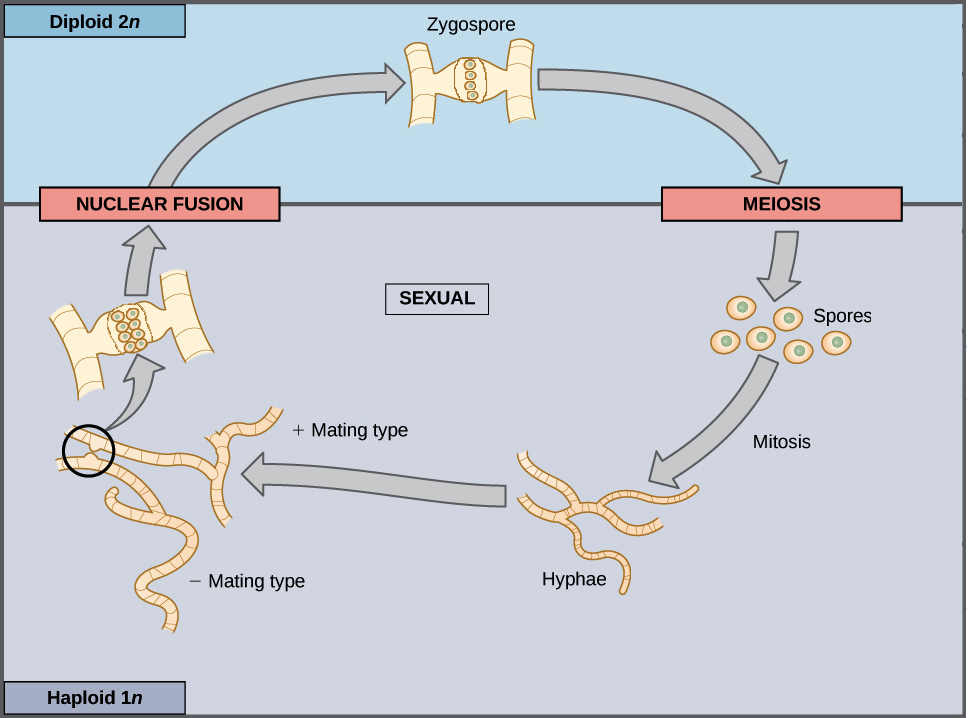
Sexual Life Cycles Article Meiosis Khan Academy

Reproduction In Fungi Life Cycle Of Fungi Youtube

Fungus Reproduction Youtube
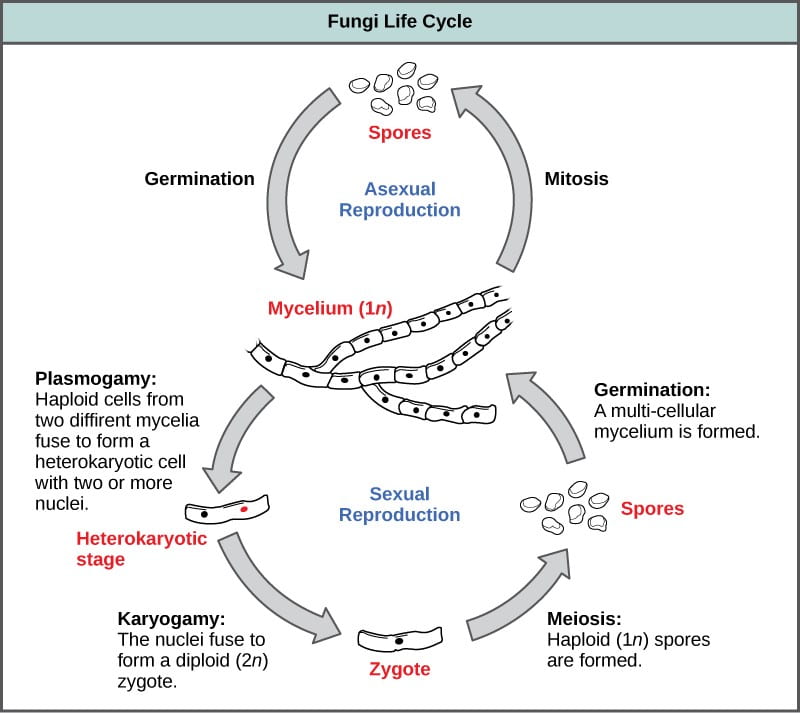
Fungi Organismal Biology

24 3b Zygomycota The Conjugated Fungi Biology Libretexts
Characteristics Of Fungi Openstax Biology 2e

Fungi Life Cycle In Basidiomycetes Youtube

Plasmogamy An Overview Sciencedirect Topics

Pin On Growing Mushrooms

Pin On Kingdom Fungi
Fungi Explained Here Is What You Need To Know Microscope Clarity

Pin On Kingdom Fungi

The Mushroom Life Cycle